
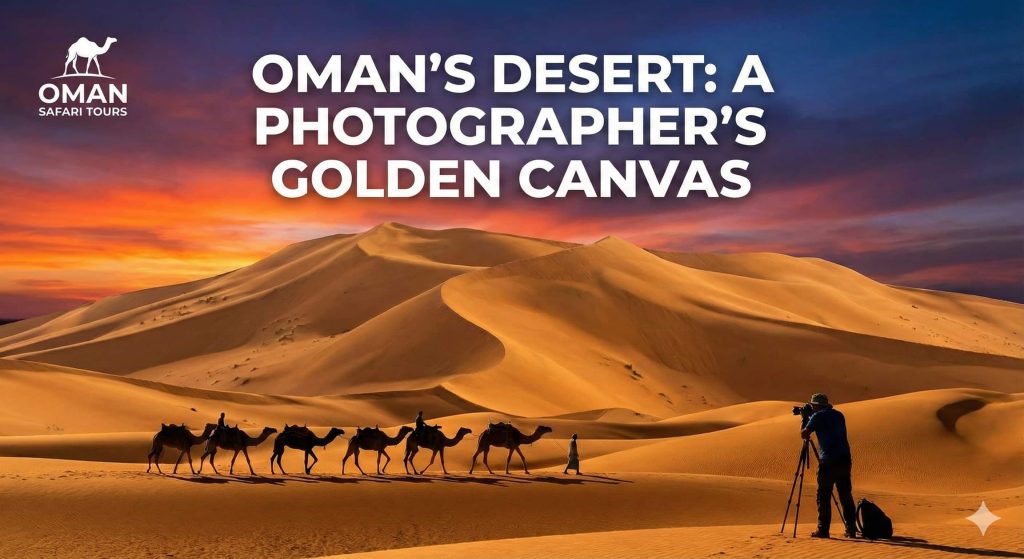
The Omani desert is more than just a landscape; it is a living canvas of light, texture, and silence. For photographers and travelers alike, a Desert Trip in Oman offers a rare opportunity to witness nature in its most dramatic form. From the golden ripples of the Wahiba Sands to the star-studded skies above the Empty Quarter, the visual possibilities are endless.
If you are planning an Oman desert tour from Muscat, you are embarking on a journey that transitions from the vibrant coast to the deep, silent wilderness. This guide is designed to help you capture that journey, offering expert advice on locations, timing, and the best ways to experience the Sultanate’s natural beauty.
Why the Omani Desert is a Unique Visual Subject
Unlike many other arid regions, Oman’s deserts are accessible yet feel completely untouched. The diversity here is striking. You can photograph the sharp, copper-colored ridges of the Sharqiya Sands one day, and the blinding white “Sugar Dunes” of Al Khaluf the next.
For those booking Oman desert tours, the experience is not just about the sand; it is about the immersion. The interplay of light and shadow on the dunes creates abstract compositions that change by the minute. Furthermore, the cultural element—seeing a Bedouin camel caravan moving across the horizon—adds a layer of storytelling that transforms a good photo into a masterpiece.
Read More – Oman Island Masirah Road Trip: How to Reach, Where to Stay & What to Do
Planning Your Journey: From City to Sand
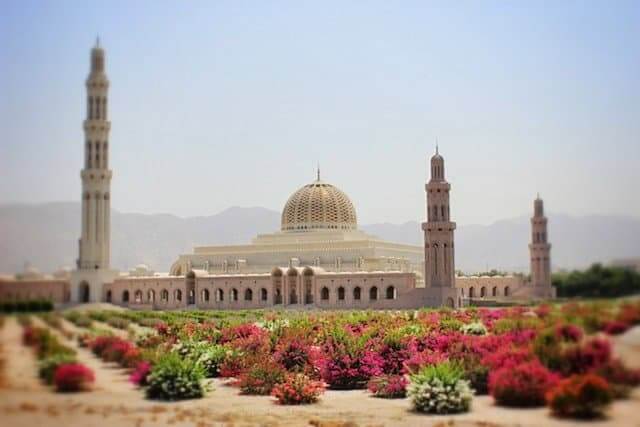
Most creative journeys begin in the capital. Before heading into the wild, a Muscat Tour provides the perfect contrast to the desert’s emptiness. The intricate Islamic architecture of the Grand Mosque and the bustling energy of the Muttrah Souq are excellent warm-up subjects for your camera.
For travelers on a tight schedule, a muscat day tour is the ideal way to capture the city’s highlights—such as the Royal Opera House and Al Alam Palace—before the afternoon drive toward the dunes. This transition, from the white-washed buildings of the city to the red sands of the desert, is a visual narrative that every photographer should document.
Top Locations for Desert Photography
To get the most out of your Oman trip to the desert, you need to know exactly where to point your lens. Here are the definitive spots for capturing the magic of Arabia.
1. Wahiba Sands (Sharqiya Sands)
This is the most iconic destination for Oman desert safari tours. Stretching over 12,000 square kilometers, Wahiba Sands is famous for its longitudinal dunes that run north to south, creating perfect lighting conditions at sunrise and sunset.
- The Shot: Look for the S-curve of the dune ridges. In the late afternoon, one side of the dune glows orange while the other falls into deep shadow, creating a stunning split-tone effect.
- The Experience: This region is easily accessible via an Oman Desert Tour from Muscat, making it perfect for both day trips and overnight stays.
2. The Empty Quarter (Rub’ al Khali)
For those seeking total isolation, the Empty Quarter offers a landscape of monumental scale. The dunes here are massive, and the silence is profound.
- The Shot: Use a telephoto lens to compress the distance between the massive dunes, creating layers of golden waves that seem to go on forever.
- The Adventure: Due to its remoteness, this area is best explored via a specialized Oman Desert CampingTour. The lack of light pollution makes it one of the best places on Earth for astrophotography.
3. Al Khaluf (The Sugar Dunes)
Where the desert meets the Indian Ocean, you will find Al Khaluf. The white sands here roll directly into the turquoise sea, offering a color palette that is unique to Oman.
- The Shot: A drone is an excellent tool here to capture the stark contrast between the white sand and the blue water.
Read More – Muscat Day Trips on a Budget: Affordable Adventures for Every Traveler
Where to Stay: Luxury in the Wilderness
Capturing the desert doesn’t mean you have to sacrifice comfort. For photographers who want to be right in the action without roughing it, staying at the Oman Hotels Desert Nights Camp is a game-changer.
Located deep within the Wahiba Sands, this luxury camp offers Bedouin-style tented suites that provide the perfect base for your shoots. You can wake up and step right out onto the dunes to catch the sunrise, then return for a gourmet breakfast. The camp itself is a beautiful subject at night, with lanterns glowing warmly against the cool blue twilight—a classic shot for any luxury travel portfolio.
Best Times to Shoot
Timing is everything. The harsh midday sun can flatten the landscape, so your itinerary should revolve around the light.
- Golden Hour: The hour after sunrise and the hour before sunset are non-negotiable. The low angle of the sun reveals the texture of the sand. Most Oman safari tours are designed to have you in the dunes during these peak times.
- Blue Hour: Don’t pack up immediately after sunset. The “Blue Hour” offers a magical balance of light where the sky is a deep indigo, but the landscape is still visible.
- Night: An Oman Desert Camping Tour is essential for star chasers. The dry desert air ensures crystal-clear views of the Milky Way, allowing for breathtaking long-exposure shots.
Expert Photography Tips
- Leading Lines: Use the sharp edges of the dunes to lead the viewer’s eye into the frame.
- Scale: The desert is vast. Place a subject—like a 4×4 Vehicle or a camel—in the distance to show the sheer scale of the environment.
- Protection: Sand is fine and intrusive. Avoid changing lenses in the wind, and always carry a blower to clean your gear at the end of the day.
Conclusion
The Omani desert is a place of timeless beauty, offering a visual experience that stays with you long after you leave. Whether you are capturing the architectural marvels on a Muscat Tour or the silent majesty of the Empty Quarter, the Sultanate offers endless inspiration.
To truly capture these moments, it is vital to travel with experts who understand the landscape. Booking with Oman Safari Tours ensures that you are in the right place at the right time, allowing you to focus on what matters most: creating unforgettable images. Pack your camera, prepare for adventure, and let the desert reveal its secrets to you.
Frequently Asked Questions (FAQs)
1. What is the best time of year for a desert trip in Oman?
The best time for photography and general travel is between October and April. During these months, the temperatures are pleasant (25°C to 30°C), making it comfortable to explore the dunes during the day and camp at night. If you are planning a desert trip in Oman specifically for photography, the winter months offer the clearest skies and the softest light.
2. Can I visit the desert as a day trip from Muscat?
Yes, absolutely. If you are short on time, an Oman desert tour from Muscat is a very popular option. The Wahiba Sands are approximately a 2.5-hour drive from the capital. We can arrange a muscat day tour that includes a morning city tour and an afternoon dune bash, allowing you to experience the golden sunset on the dunes and return to your hotel by evening.
3. Do I need to be a professional photographer to join these tours?
Not at all. While our guides know the best spots for professionals, Oman desert safari tours are designed for everyone. Whether you are shooting with a high-end DSLR or just an iPhone, the landscape is so stunning that you are guaranteed to get beautiful shots. Our guides are happy to help you find the best angles.
4. Where is the best place to stay for a luxury experience?
For travelers who want a mix of adventure and comfort, we highly recommend staying at the Oman Hotels Desert Nights Camp. It is the ultimate “glamping” experience, offering air-conditioned Bedouin-style tents and gourmet dining. It serves as a perfect base for exploring, allowing you to rest in luxury after a long day of shooting.
5. Is it safe to camp in the desert?
Yes, Oman is one of the safest countries in the world. An Oman desert camping tour is a safe and magical experience. When you book with a reputable operator like Oman safari tours, you are provided with experienced guides, high-quality camping gear, and all safety equipment. Sleeping under the stars in the Empty Quarter is often cited by our guests as the highlight of their trip.
6. What type of vehicle is used for the safari?
Navigating the dunes requires skill and the right equipment. All Oman desert tours are conducted in modern, air-conditioned 4×4 Land Cruisers (or similar vehicles). These vehicles are specially equipped for off-road driving. Our drivers are experts at “dune bashing” and know how to drive smoothly to ensure your comfort and safety during your Oman trip to the desert.
7. How do I book a customized photography tour?
Booking is simple. You can contact Oman Safari Tours directly through our website. Let us know if you want to focus on landscape photography, astrophotography, or cultural portraits. We can customize an itinerary that includes a muscat tour for architectural shots and a multi-day desert expedition tailored exactly to your creative needs.