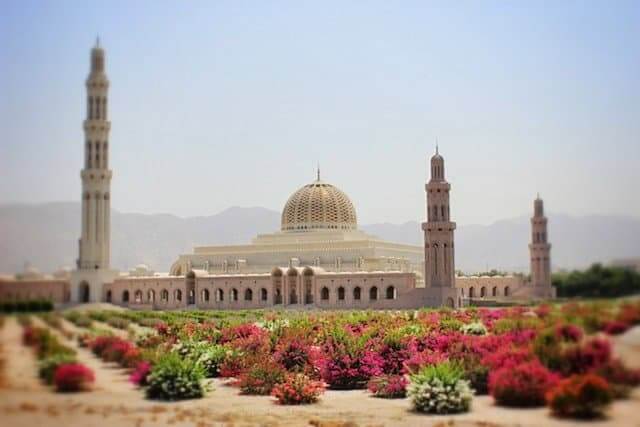


Muscat can be seen well in a single day. A typical first-timer route covers the Sultan Qaboos Grand Mosque (open to non-Muslim visitors 8am–11am, Saturday to Thursday), Mutrah Souq and Corniche, and the Royal Opera House area, usually with a guided Muscat City Tour lasting 6–8 hours. October to April offers the most comfortable weather for walking between stops.
Muscat City Tour: What to Expect
A Muscat city tour takes you through a genuine mix of Omani culture and history in a single day. As the capital of Oman, Muscat blends tradition and modern development comfortably — grand mosques sit alongside contemporary architecture without either feeling out of place. The city moves through lively markets like Mutrah Souq, where the scent of spices mixes with the sound of traders bargaining. Along the waterfront, the Sultan Qaboos Grand Mosque commands attention with its scale and detail, while Al Alam Palace stands as a symbol of the country’s royal heritage. Framed by rugged mountains and the turquoise waters of the Gulf of Oman, Muscat’s appeal isn’t limited to its sights — the warmth of its people is just as much a part of the experience. A day spent exploring Muscat is a genuine introduction to the essence of Oman.
What Makes Muscat Special?
Muscat, the capital of Oman, combines traditional charm with modern comfort in a way that sets it apart from many other Gulf cities. What truly distinguishes it is the ease with which heritage and contemporary development coexist. Striking architecture blends naturally into the landscape, offering visitors a genuine mix of grand mosques, historic forts, and lively markets. The city’s commitment to preserving its cultural roots is visible in its carefully planned urban layout and the protection of its historic sites. Set between dramatic mountains and the deep blue waters of the Gulf of Oman, Muscat’s natural setting is matched by the warmth of its residents — a combination that makes it a genuinely rewarding destination for travelers seeking an authentic Gulf experience.
Here are some of the things that make Muscat special:
- Sultan Qaboos Grand Mosque: One of the largest and most striking mosques in the world, and a genuine must-see for any first-time visitor. For full visiting details, dress code, and current entry information, see our dedicated Grand Mosque guide.
- The Royal Opera House: A symbol of Muscat’s cultural life, hosting performances throughout the year and surrounded by cafés worth a stop even outside show times.
- Mutrah Fort: A historic fort on the Mutrah waterfront, offering elevated views over the harbor and the Gulf of Oman.
- Mutrah Souq: A traditional market and one of the best places to buy souvenirs and handicrafts while getting a genuine feel for Omani daily life.
- Muscat’s beaches: Several clean, easily accessible beaches along the coastline, good for a relaxed break between sightseeing stops.
If you’re looking for a city that balances the modern and the traditional, with something for every type of traveler, Muscat delivers.
Read More:- Half Day Muscat City Tour

How to Spend a Day in Muscat
Exploring Muscat rewards a bit of structure, since the city’s highlights are spread along the coast rather than clustered in one walkable center.
Morning: Start with a walk along the Corniche, where the turquoise waters of the Gulf of Oman meet the shore — a calm, scenic way to begin the day before the heat builds.
Midday: Head into the winding lanes of Mutrah Souq, where spice stalls, handcrafted goods, and animated bargaining fill the alleys. Allow at least an hour here, more if you enjoy browsing.
Afternoon: Visit the Sultan Qaboos Grand Mosque during its non-Muslim visiting window (8am–11am, so this may need to shift earlier in your day depending on your itinerary), then continue to Al Jalali and Al Mirani forts, which guard the harbor entrance and add a strong sense of the city’s older history.
Evening: Enjoy dinner at a local restaurant serving traditional Omani dishes — fragrant rice, grilled meats, and Omani sweets are all worth trying — then take an evening walk along the Mutrah Corniche as the lights come on. If you have an extra evening in the city, our Muscat night tour guide covers this in more depth, including the souq after dark and the city’s best viewpoints.
If you have extra time beyond a single day:
- Explore Old Muscat, the historic heart of the city and home to many of its most significant landmarks.
- Hike in the Hajar Mountains, which offer dramatic views and good trails for a half-day outing.
- Visit Wadi Shab, a canyon with turquoise pools and towering cliffs, ideal for swimming and photography.
- Take a desert safari to experience the dunes and Oman’s desert landscapes.
Day-Use Hotels in Muscat
Day-use hotels are a practical option for travelers who want a place to rest, freshen up, or store luggage between activities — useful for long layovers, early flights, or simply a midday break from the heat.
Some well-known day-use options in Muscat include:
- Aerotel Muscat: Located inside Muscat International Airport, ideal for transit passengers or early/late flights.
- Novotel Muscat Airport: A short distance from the airport, convenient for travelers who want a proper room to rest in before or after a flight.
- Hilton Garden Inn Muscat Al Khuwair: Set in a quieter part of the city, good for travelers wanting a break from the busier tourist areas.
- Ibis Muscat: Centrally located with easy access to many of the city’s main attractions, at a more budget-friendly price point.
Tips for finding day-use rates in Muscat:
- Check directly with hotels. Many properties offer day-use rates without advertising them prominently online — a quick call or message to the front desk often works.
- Use a day-use booking platform. Several booking services specialize in comparing day-use rates across hotels, making it easier to find the best option for your schedule.
- Book ahead where possible. Day-use rooms can sell out on busy days, particularly around flight-heavy periods, so reserving in advance helps guarantee availability.
What to See in Muscat in One Day
If you only have one day, here’s a realistic itinerary:
Morning: Visit the Sultan Qaboos Grand Mosque during its non-Muslim visiting hours (8am–11am, Saturday to Thursday). Modest dress is required, and it’s genuinely one of the largest and most detailed mosques in the world — worth the early start.
Afternoon: From the mosque, head to Mutrah Souq, a traditional Arab market where you can find spices, souvenirs, gold, and silver jewelry. Bargaining is expected and part of the experience.
Evening: Enjoy a meal at a local restaurant serving traditional Omani cuisine, then walk the Mutrah Corniche as the city lights come on — one of the most relaxing ways to end the day.
Muscat City Tour Packages
A guided Muscat city tour package is an efficient way to see the city’s highlights in a short amount of time. These packages typically include transportation, a local guide, and entry to major attractions such as the Sultan Qaboos Grand Mosque, Mutrah Souq, and the Mutrah Corniche.
There’s a range of Muscat city tour packages available, suited to different interests and budgets — some are built for families, others for couples or solo travelers.
Why book a guided tour instead of going independently:
- Save time: No need to plan your own route or arrange transport between stops.
- Learn more: A local guide adds historical and cultural context you’d likely miss on your own.
- Meet other travelers: Group tours are a natural way to connect with people from elsewhere.
- Cover more ground: Guided logistics mean you see more of the city’s highlights within a single day.
A few things to consider when choosing a package:
- Your budget — Muscat city tours range from budget-friendly shared tours to private, fully customized experiences.
- What you want to see — some packages focus on historical landmarks, others lean toward natural attractions like the coastline or nearby wadis.
- Your schedule — full-day and half-day options are both available, so pick based on how much time you actually have.
- Recent reviews — checking recent traveler feedback gives a good sense of what to expect from a specific operator.